

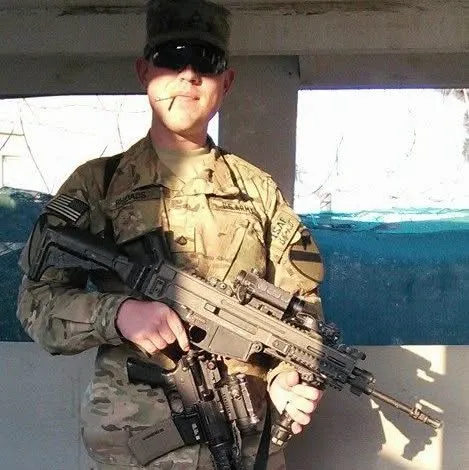
Army and Guard work taught that small choices matter: where something rides, how fast it can be reached, how weather changes the plan, and how systems fail when people are tired.
// Clearance: public // Status: operational //
// Subject: founder, KTT Goods Co. // Field office: Eureka, Montana //
The story behind KTT.
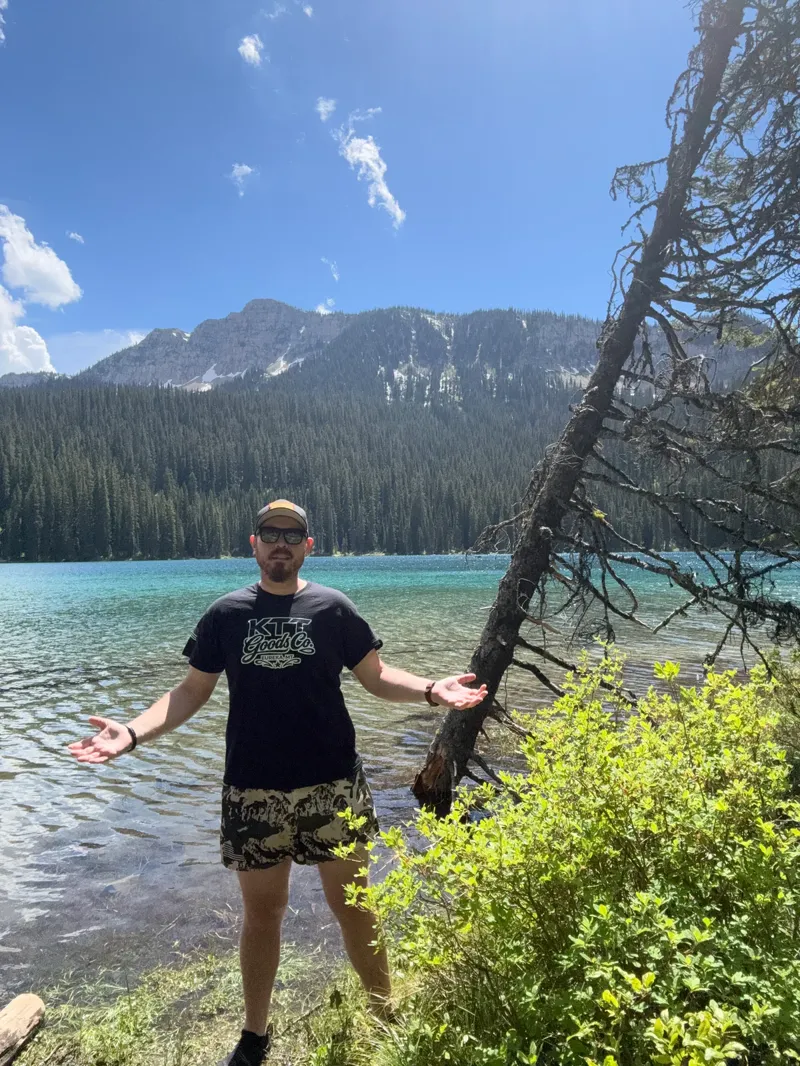
KTT Goods Co. is Cody Rhoads' field lab in Eureka, Montana, built from Army service, Forest Service and fire work, computer science, cybersecurity, and daily exposure to Northwest Montana terrain.
Before KTT is a product line, it is a way of thinking: study the environment, understand the system, test the weak point, and explain the result clearly. That background is why the company cares about terrain, load, weather, signal exposure, and practical decisions instead of just making another outdoor brand.
A company built from mixed experience
KTT comes from a background that crosses physical field work and technical systems. Cody's path is the reason the company talks about terrain, signal, weather, load, and decision-making in the same sentence.
Forest Service and fire work added smoke, mud, brush, long days, cold mornings, hot slopes, and the kind of practical respect that only comes from working outside.
Computer science and cybersecurity added another lens: map the system, find the exposure, understand the signal, and make the answer simple enough to act on.
Why the background matters
Cody Rhoads founded KTT in Eureka after years of work that kept crossing the same line: field problems are never only physical, and digital problems are never only abstract.
Cody's background sits across field systems, physical load discipline, forest and fire work, terrain observation, computer science, and cybersecurity. KTT is the company that came out of that overlap.
2013-2014 // Afghanistan
Combat systems
Service as a 13D Field Artillery Automated Tactical Data Systems Specialist shaped the technical side of field work: maps, data, comms, timing, and decisions under pressure.
Mortar work made weight, placement, access, and reliability non-abstract. The lesson was simple: field decisions have to survive contact with fatigue, weather, noise, and time pressure.
Forest Service // Fire
Terrain respect
Forest protection and wildland fire work added weather, fatigue, brush, smoke, mud, and long days. That work made terrain feel less like scenery and more like a system with consequences.
Computer science and cybersecurity added the digital layer: networks, devices, data trails, signals, and risk. That knowledge gives KTT its systems mindset.
A field brain with a systems habit
The company is built around a simple habit Cody learned from both field work and technical work: observe what is actually happening, model the system, test the weak point, then explain the result plainly.
Field problems start with the body.
The physical layer is about what a person feels immediately: weight, reach, weather, fatigue, gloves, noise, pressure, and whether the plan still works when conditions get worse.
Why KTT exists
KTT exists to turn Cody's mixed background into something useful: a public notebook, a field lab, and a company that makes complicated field and security ideas easier to understand.
KTT should never feel like random tactical branding. The point is to show why something matters, what problem it answers, and what Cody learned while testing it.
Northwest Montana gives KTT snow, timber, fire scars, roads, waterlines, cold, heat, mud, and long sightlines. The company uses those conditions as the proving ground.
The site, YouTube channel, R&D tools, and hidden archive are all ways to make the process visible. KTT is meant to teach while it builds.
Where the work is going
The current site is the public version of Cody's notebook: terrain studies, signal experiments, pattern work, field interfaces, video updates, and the early commercial pieces that fund the next round. When KTT uses terms like R&D, AO, or RF, the plain meaning is research, area, and wireless signal.
The place where KTT explains field problems, experiments, and the thinking behind the company.
Open R&D LabA terrain-reading console built from Montana roads, timber, snowline, shorelines, and exposure points. AO means Area of Operations.
Scan AreaA practical way to show how phones, cards, laptops, and small devices create modern exposure.
Open Signal RangeA visual study of color, breakup, contrast, sensors, and transitional Northwest Montana terrain.
Run PatternThe public build log for field notes, tests, product context, and the company's direction.
Open YouTubeKTT is not just a catalog. It is Cody's attempt to turn Army service, fire and forest work, software, cybersecurity, and Montana terrain into a company that teaches while it builds. The work is still evolving, but the standard stays the same: observe it, test it, explain it, improve it.