Observed
The public file defines a credential-stack workflow, compact carrier form, shielding target, and deliberate present-and-stow access routine.
500D Cordura target · shielding composite study · everyday credential carry
Request route This is not a buy-now wallet. A shielded carrier requires a workshop review around the exact card stack, access routine, materials, and finished-build test plan.
This page documents a contactless-card shielding study from Koocanusa Tech & Tactics for KTT Goods Co., its goods division. Shielded credential carry is now treated as an option inside the broader made-to-order pouch workshop and still requires finished-build testing.

Concept images These images show a research direction, not a finished retail product. Any future credential carrier requires testing with the actual cards and completed enclosure.

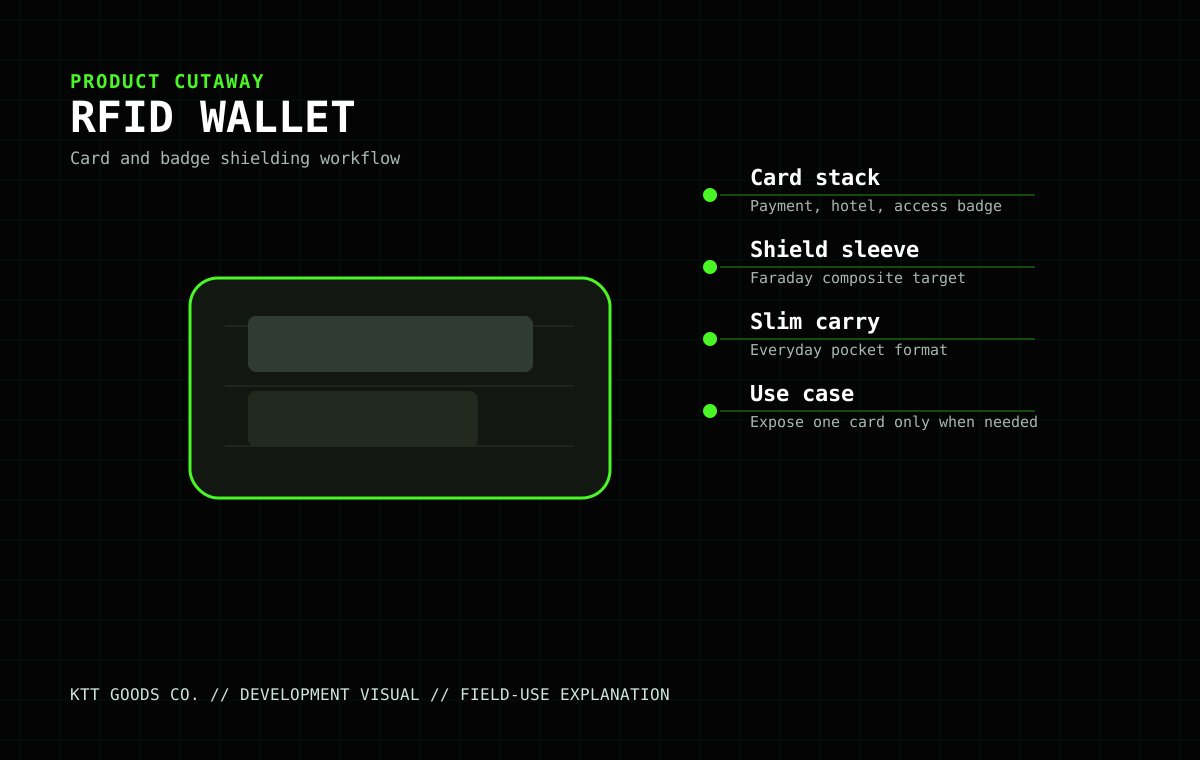
Concept imagery and the illustration below describe a design goal. They do not establish protection, range, or attenuation.
The RFID Wallet is an archived credential-carrier study. RFID means Radio-Frequency Identification: the contactless chip system in some cards, badges, keys, and tags. Use this file to understand the construction problem, then bring the credential count, carry position, closure, and access routine into the Custom Pouch Workshop.
The public file defines a credential-stack workflow, compact carrier form, shielding target, and deliberate present-and-stow access routine.
No finished retail sample or card-read result is published. Card, badge, reader, stack, and environment can change behavior.
A completed carrier must be checked with the exact credentials and intended readers across repeated closed, opened, and presentation states.
Contactless cards and badges are designed to respond when they are near compatible readers. That convenience is useful, but it also creates a small signal surface that many people never think about until they need more control.
The KTT RFID Wallet is one compact study inside the wider Custom Pouch Workshop: a Cordura exterior, shielding-focused lining, and a deliberate present-and-stow workflow that must be validated with the finished carrier and actual credentials.
The threat model is proximity and convenience. Payment cards, hotel keys, access badges, and transit cards may all behave differently, but the user goal is consistent: keep credentials shielded until they are intentionally used.
This file remains public because the credential-carry problem is useful. For a real project, bring the card stack, access routine, carry position, and validation requirement to the Custom Pouch Workshop.
The proposed workflow is simple: separate the credential you want to present, use it, then return it to the carrier. The lining and closed-carrier behavior still require testing.
Choose a daily carry problem and the wallet recommendation updates with use notes.

